
Exploring Streaming Options Through Real Viewing Experiences And Needs

Exploring Streaming Options Through Real Viewing Experiences And Needs

The first few minutes with a streaming service can be misleading.  Everything feels new. Channels are loading, menus are being explored, and content libraries seem endless. At that stage, most platforms look quite impressive.

A few weeks later, people start noticing different things. How easy it is to find content. Whether streams remain stable during busy evenings. How smoothly devices switch from one screen to another.

Those everyday experiences often reveal more than any promotional page. When evaluating services associated with topiptservices.com, looking at real usage situations usually provides a clearer picture than simply comparing feature lists.

How People Evaluate Platforms After Initial Setup

The installation process is only the beginning. Once a platform becomes part of a daily routine, viewers start paying attention to details they ignored during setup.

Common observations include:

  • How quickly channels load
  • Whether menus feel responsive
  • How easily movies can be located
  • Search function accuracy
  • Program guide performance
  • Application stability

These factors rarely appear at the top of comparison lists. Still, they influence the experience almost every day. What feels minor during the first login often becomes important after months of use.

topiptservices.com

Small Platform Details That Influence Satisfaction

Large features attract attention. Small details influence long term satisfaction. Viewers interact with these smaller elements constantly.

Examples include:

  • Menu responsiveness
  • Favorites management
  • Recently viewed sections
  • Program guide accuracy
  • Category organization
  • Content recommendations

None of these features are particularly exciting.

Yet they shape how a platform feels during everyday use. A well organized service often creates a smoother experience without users consciously thinking about why.

Why Navigation Quality Matters

People spend a surprising amount of time navigating. Looking for a live match. Searching for a film. Browsing television series. Checking upcoming schedules.

Strong navigation systems often provide:

  • Clear content categories
  • Logical menu layouts
  • Quick access sections
  • Reliable filtering tools
  • Consistent navigation paths
  • Easy content discovery

When navigation works well, viewers move through the platform naturally. When it does not, frustration builds quickly. The difference becomes obvious after repeated use.

Looking Beyond Promotional Claims

Marketing pages naturally focus on strengths. They highlight features, channel counts, and content availability. Those things matter. Practical performance matters too.

Questions worth considering include:

  • Does the service remain stable?
  • Is content easy to locate?
  • Are applications responsive?
  • Do devices work consistently?
  • Is navigation straightforward?
  • Does the platform remain reliable over time?

These questions focus on actual usage rather than promotional messaging. That perspective usually provides a more realistic understanding of service quality.

Long Term Experience Tells A Different Story

Many platforms create a strong first impression. Long term use reveals more.

Over time, viewers begin noticing:

  • Update frequency
  • Application maintenance
  • Content organization
  • Search performance
  • Playback consistency
  • Account management flexibility

These factors may not be visible during the first few days. Several months later, they become much easier to evaluate. A service that remains dependable over time often creates greater satisfaction than one built around impressive short term features.

Evaluating services associated with topiptservices.com becomes easier when attention shifts toward real viewing experiences rather than feature lists alone. Stream stability, search functionality, navigation quality, device flexibility, and long term reliability all contribute to the overall experience.

How Dental Implants Prevent Premature Ageing and Facial Collapse

How Dental Implants Prevent Premature Ageing and Facial Collapse

Understanding the Connection Between Tooth Loss and Facial Structure

The human face is a remarkable structure, supported by an intricate framework of bone, muscle, and tissue. What many people fail to realise is that teeth play a crucial role in maintaining this framework. When teeth are lost, the consequences extend far beyond gaps in one’s smile. The absence of teeth triggers a cascade of changes that can dramatically alter facial appearance, leading to premature ageing and what dental professionals refer to as facial collapse.

The jawbone requires constant stimulation to maintain its density and volume. Natural teeth provide this stimulation through everyday activities such as chewing and biting. When teeth are missing, the bone that once supported them begins to deteriorate in a process called resorption. This bone loss doesn’t simply create empty spaces in the jaw; it fundamentally alters the shape and structure of the face, often adding years to a person’s appearance. There is, however, a solution in the form of dental implants Brentwood.

The Science Behind Bone Resorption

Bone resorption occurs when the body recognises that certain bone tissue is no longer needed. Without the pressure and stimulation from tooth roots, the jawbone begins to shrink and recede. Studies have shown that patients can lose up to 25 per cent of their jawbone width within the first year following tooth extraction. This deterioration continues progressively, with traditional dentures offering little protection against ongoing bone loss.

The ramifications of this process are both functional and aesthetic. As the jawbone diminishes, the lower third of the face begins to collapse inward. The distance between the nose and chin decreases, creating a sunken appearance that is characteristic of advanced ageing. Wrinkles deepen around the mouth, the lips lose their support and fullness, and the face takes on a hollow, gaunt quality that can make individuals appear significantly older than their actual years.

Visible Signs of Facial Collapse

Several telltale signs indicate that facial collapse is occurring. These include pronounced wrinkles around the mouth, often called marionette lines, a thinning of the lips, jowls forming along the jawline, and a general sagging of facial tissues. The chin may appear more pointed or prominent, whilst the cheeks lose volume and definition. For those seeking solutions, dental implant specialists can provide comprehensive assessments and treatment options.

How Dental Implants Preserve Facial Structure

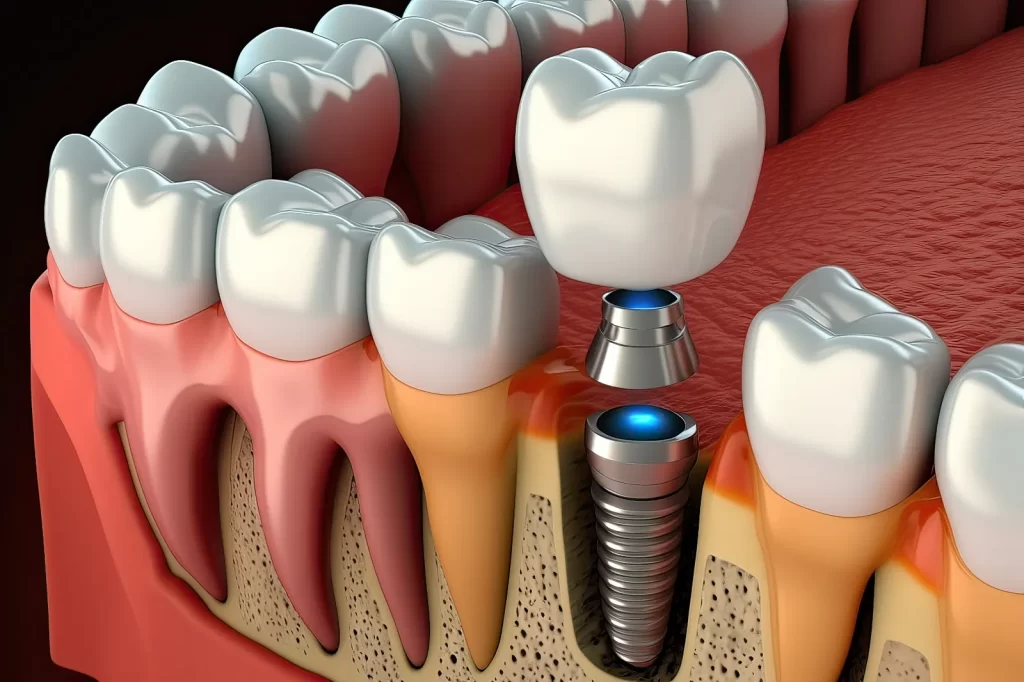
Unlike traditional dentures or bridges, dental implants address the root cause of facial collapse by replacing not just the visible crown of the tooth, but the root as well. Titanium posts are surgically placed into the jawbone, where they fuse with the bone tissue through a process called osseointegration. This fusion creates a stable foundation that mimics the function of natural tooth roots, providing the essential stimulation needed to maintain bone density.

The preservation of jawbone density has profound effects on facial aesthetics. By maintaining the bone structure, implants help preserve the natural contours of the face. The lower third of the face retains its proper height and projection, preventing the sunken appearance associated with tooth loss. The lips maintain their support, cheeks retain their fullness, and the overall facial profile remains youthful and well-defined.

Long-Term Benefits for Facial Appearance

Research has consistently demonstrated that dental implants effectively prevent bone loss and maintain facial structure over the long term. Patients who receive implants can expect their facial features to remain stable, avoiding the progressive deterioration that affects those with missing teeth or traditional dentures. This stability not only preserves appearance but also maintains proper bite function and jaw alignment.

The aesthetic advantages extend beyond bone preservation. Practitioners report that patients experience improvements in facial symmetry, reduced wrinkle formation, and a more youthful overall appearance. The restoration of proper vertical dimension—the height of the lower face—can reverse some of the ageing effects that may have already occurred, effectively turning back the clock on facial appearance.

Making an Informed Decision About Dental Implants

Understanding how dental implants prevent bone loss and facial collapse empowers individuals to make informed decisions about their oral health. The investment in dental implants extends beyond dental function; it represents a commitment to maintaining facial structure and preventing premature ageing. For those considering tooth replacement options, the evidence overwhelmingly supports implants as the most effective solution for preserving both oral health and facial aesthetics.

Consulting with qualified dental professionals allows patients to explore whether they are suitable candidates for implant treatment. With proper care and maintenance, dental implants can provide lifelong benefits, ensuring that patients retain their natural facial contours and youthful appearance for decades to come.

Modern THCA carts usage reflecting shifting attitudes toward alternative cannabis consumption methods

Modern THCA carts usage reflecting shifting attitudes toward alternative cannabis consumption methods

A quiet shift is shaping how people choose intake habits today. Preferences are moving toward controlled intake choices that feel simple to manage. Devices are becoming compact and easy to handle. Users look for clarity in content and steady results. Awareness around intake quality is rising among new users. Many now visit site pages to understand options before trying anything new.

Changing social views shaping personal intake habits

Awareness grows through shared knowledge and open discussion. People now seek more control in personal routines.

  • Users prefer measured intake levels for stable daily comfort
  • Younger groups adopt portable tools for easier, discreet usage
  • Social circles influence safer choices through shared real-life feedback
  • Many choose controlled formats to reduce strong, unpredictable effects

These patterns show a clear move toward careful and informed choices.

Shifting lifestyle patterns influencing product selection

Lifestyle pace is fast, so simple options gain attention. People want tools that fit daily routines. Compact devices match this need well. Ease of use supports repeated adoption across different groups.

Evolving awareness around intake consistency and control

Consistency matters more than intensity for many users now. Reliable output creates trust over time. Balanced intake supports routine without sudden change. Clear labeling also supports better understanding.

Product design features guiding new user interest

	
cbd vape pen

Design choices now focus on comfort and ease of use. Practical shape supports smooth handling during usage.

  • Smooth airflow design allows stable draw without harsh throat impact
  • Compact body supports easy storage inside small personal carrying spaces
  • Clear chamber helps users check content level without guesswork
  • Button-free models simplify operation for first-time users
  • Battery efficiency ensures longer use without frequent recharge interruption
  • Leak-resistant build prevents waste and keeps the device clean
  • Heat control systems maintain stable output during extended usage
  • Lightweight structure improves grip and reduces handling strain

Design improvements support trust and repeated use.

Market signals showing a gradual behavioural transformation

Growth patterns show steady interest rather than sudden spikes. Many users research before trying. Reviews guide decision making strongly. At this stage, users often visit site sources to compare features.

Usage patterns shifting toward mindful consumption habits

People avoid excess and choose steady intake levels now. Awareness drives better planning. Simple routines help maintain balance. Users value predictability over intensity.

Cultural acceptance influencing broader adoption rates

Public perception is changing slowly through exposure and education. Conversations reduce confusion. Clear information helps remove hesitation. Acceptance grows through shared understanding.

What steady adoption trends suggest today?

Gradual adoption shows careful thinking rather than impulse behaviour. People test slowly before regular use. Knowledge plays a strong role in decision making. Balanced intake becomes the preferred approach.

FAQ section

  • What drives current usage changes? Better awareness and simple device design guide decisions.
  • Why do users prefer controlled intake? It helps maintain balance without sudden effects.
  • Are compact devices widely used? Yes, because they are easy to carry and handle.
  • How do users learn before trying? They read details and compare information sources.
  • Is consistency more important than strength? Yes, steady output supports routine better.

Balanced choices shape future direction

Careful decisions now define long term habits. Users focus on clarity rather than speed. Simple routines support steady outcomes. Knowledge guides each step without confusion. Consistent action always brings better results than chasing quick change.

Exploring the Impact of Virtual Navigation on Dental Website User Experience

Exploring the Impact of Virtual Navigation on Dental Website User Experience

The Digital Revolution in Dental Practice Marketing

The dental industry has witnessed a remarkable transformation in recent years, with practitioners increasingly recognising the pivotal role that digital presence plays in attracting and retaining patients. Modern dental websites have evolved far beyond simple brochure-style pages, incorporating sophisticated virtual navigation systems that fundamentally reshape how patients interact with dental practices online. This evolution represents a significant shift in patient expectations and digital engagement patterns within the healthcare sector.

Virtual navigation encompasses a broad spectrum of interactive elements, from intuitive menu structures and visual patient journeys to immersive virtual surgery tours and appointment booking systems. These technological innovations serve as digital bridges, connecting potential patients with dental services whilst providing seamless, user-centric experiences that mirror the quality of care patients can expect in person.

Understanding Virtual Navigation Elements

Interactive Menu Systems and User Pathways

Contemporary virtual navigation systems employ intelligent design principles that anticipate user behaviour and streamline the patient journey. These systems utilise predictive pathways that guide visitors through logical sequences, whether they’re seeking emergency dental care, routine treatments, or specialist services. The implementation of user-friendly navigation structures has become essential for dental practices aiming to convert website visitors into actual patients.

Advanced navigation features include contextual menus that adapt based on user preferences, breadcrumb trails that maintain orientation throughout complex sites, and intelligent search functions that understand dental terminology. These elements work cohesively to reduce cognitive load whilst maximising information accessibility, ensuring that patients can effortlessly locate relevant services and contact information.

Visual and Interactive Treatment Presentations

Modern dental practices leverage virtual navigation to demystify complex procedures through interactive treatment galleries and step-by-step procedure walkthroughs. These immersive experiences allow patients to visualise treatment outcomes, understand procedural steps, and make informed decisions about their oral health. Virtual before-and-after galleries, interactive treatment planners, and educational modules transform traditionally intimidating dental procedures into comprehensible, approachable experiences that build patient confidence and trust.

Measuring User Experience Impact

Patient Engagement Metrics and Behavioural Patterns

The implementation of sophisticated virtual navigation systems yields measurable improvements in key performance indicators that directly correlate with patient acquisition and retention. Analytics data consistently demonstrates reduced bounce rates, increased session duration, and higher conversion rates when dental practices invest in intuitive navigation architectures. These metrics reflect genuine user satisfaction and engagement levels, providing concrete evidence of virtual navigation’s effectiveness in dental website environments.

Patient behaviour studies reveal that users spend considerably more time exploring practices with well-structured virtual navigation systems, leading to increased appointment bookings and enhanced brand loyalty. The correlation between navigation quality and patient trust becomes particularly evident when examining user feedback and testimonial submission rates, which typically increase alongside navigation improvements.

Mobile Responsiveness and Cross-Platform Consistency

The proliferation of mobile device usage necessitates virtual navigation systems that maintain functionality and aesthetic appeal across diverse platforms and screen sizes. Building comprehensive online presence strategies requires careful consideration of how navigation elements translate between desktop and mobile experiences, ensuring seamless transitions that preserve user engagement regardless of access method.

Responsive navigation design incorporates touch-friendly interfaces, simplified menu structures for smaller screens, and optimised loading speeds that accommodate varying internet connection qualities. These considerations prove particularly crucial for emergency dental situations where patients require immediate access to contact information and location details.

Future Implications and Best Practices

The evolution of virtual navigation continues to accelerate, with emerging technologies promising even more sophisticated user experiences. Effective dental website navigation strategies increasingly incorporate artificial intelligence, chatbot integration, and personalised content delivery systems that adapt to individual user preferences and browsing histories.

Dental practices that prioritise virtual navigation excellence position themselves advantageously within competitive markets, attracting tech-savvy patients whilst maintaining accessibility for less digitally literate demographics. The investment in comprehensive navigation systems yields long-term benefits that extend beyond immediate patient acquisition, fostering brand recognition and professional credibility within local communities.

Final Thoughts on Digital Navigation Excellence

Virtual navigation represents a fundamental component of modern dental practice success, transforming patient interactions and establishing new standards for healthcare website functionality. Practices embracing these technological advances demonstrate commitment to patient-centred care that extends beyond clinical excellence into digital accessibility and user experience optimisation.

Beyond Aesthetics: How Dental Implants Can Improve Oral Structure

Beyond Aesthetics: How Dental Implants Can Improve Oral Structure

Understanding the Structural Foundation

When most people consider dental implants Northern Ireland, they often focus primarily on the cosmetic benefits – the gleaming smile and restored confidence that comes with a complete set of teeth. However, the true marvel of dental implant technology extends far beyond surface-level improvements. These sophisticated titanium fixtures serve as the architectural backbone of oral health, providing structural integrity that ripples throughout the entire facial framework.

The human mouth operates as a complex ecosystem where every component plays a crucial role in maintaining overall stability. When teeth are lost, whether through injury, decay, or periodontal disease, the consequences extend well beyond the visible gap. The underlying bone structure begins to deteriorate, facial muscles lose their support, and the remaining teeth start to shift positions, creating a cascade of structural complications that can fundamentally alter one’s oral anatomy.

The Science Behind Bone Preservation

One of the most remarkable aspects of dental implant technology lies in its ability to preserve jawbone density through a process called osseointegration. Unlike traditional dentures or bridges that merely rest upon the gums, implants are surgically placed directly into the jawbone, where they fuse with the natural bone tissue over several months. This integration creates a robust foundation that mimics the natural tooth root system.

The dental implant surgery process involves precise placement of titanium posts that stimulate the surrounding bone tissue, preventing the resorption that typically occurs after tooth loss. This biological response is crucial for maintaining facial structure and preventing the sunken appearance that often develops when multiple teeth are missing.

Restoring Natural Bite Function

The structural benefits of dental implants extend significantly into functional restoration. When individuals seek dental implants, practitioners consistently emphasise how these devices restore proper bite alignment and chewing efficiency. Unlike removable prosthetics that can slip or cause discomfort, implants provide stable anchoring points that allow for natural jaw movement and optimal force distribution.

Supporting Adjacent Teeth

The structural advantages of implants become particularly evident when examining their impact on neighbouring teeth. Traditional bridge work requires grinding down healthy adjacent teeth to serve as anchors, compromising their structural integrity. Implants eliminate this necessity by providing independent support, allowing surrounding teeth to maintain their natural strength and positioning. This preservation approach ensures long-term oral health whilst preventing the domino effect of further tooth loss.

Furthermore, implants help maintain proper spacing between teeth, preventing the migration that commonly occurs when gaps are left untreated. This spacing preservation is crucial for maintaining bite alignment and preventing temporomandibular joint disorders that can arise from altered jaw mechanics.

Facial Structure and Muscle Support

The relationship between dental implants and facial musculature represents another fascinating aspect of structural improvement. When teeth are missing, the facial muscles lose their natural support system, leading to premature ageing and altered facial proportions. Implants restore this support network, maintaining the natural contours of the face and preventing the collapsed appearance associated with extensive tooth loss.

The growing popularity of dental implants stems largely from these comprehensive structural benefits that extend well beyond simple tooth replacement. Patients often report improved speech patterns, enhanced chewing ability, and restored facial symmetry following implant placement.

Long-term Structural Stability

The durability of implant-supported structures provides lasting benefits that continue to evolve over time. Unlike traditional prosthetics that may require frequent adjustments or replacements, properly maintained implants can provide decades of stable support. This longevity ensures consistent structural integrity throughout the ageing process, maintaining oral health and facial support well into later years.

Research consistently demonstrates that implant-supported restorations maintain their structural properties more effectively than conventional alternatives. The comprehensive benefits of dental implant treatment include enhanced bone density preservation, improved bite force distribution, and superior long-term stability compared to removable prosthetics.

The Complete Structural Solution

Dental implants represent a paradigm shift in restorative dentistry, offering comprehensive structural solutions that address the complex interplay between oral health, facial anatomy, and functional restoration. By understanding these broader implications, patients can appreciate how implant technology provides benefits that extend far beyond aesthetic improvement, creating a foundation for lifelong oral health and structural integrity.

Preventive exclusion systems block future animal entry into vulnerable buildings

Preventive exclusion systems block future animal entry into vulnerable buildings

A faint rustle inside wall gaps often signals hidden access routes that weaken interior security. Tiny openings invite repeated shelter attempts when left untreated for long periods. Property owners rely on san antonio wildlife removal services to guide strong closure methods that protect enclosed spaces. Durable barriers stop movement through roof edges and utility passages. Clean structural lines reduce attraction for roaming creatures. The following segments present practical solutions that maintain sealed surroundings and lasting indoor stability.

Entry Point Mapping For Full Coverage

Thorough inspection reveals small gaps around vents and frames. Early identification prevents repeated interior occupation.

  • Roof junction scanning detects narrow openings near structural intersections
  • Wall seam review exposes cracks behind exterior finishing layers
  • Utility line observation identifies gaps around service entry paths
  • Foundation edge checking reveals ground-level movement routes

Complete mapping ensures reliable closure.

Reinforced Screening across Vent Openings

Strong mesh resists chewing pressure from persistent animals. Proper fitting maintains airflow while blocking access. Durable installation supports long-term enclosure strength. Secure vents protect upper structural zones.

Surface Alignment for Seamless Protection

professional wildlife removal services

Misaligned panels create hidden voids along exterior sections. Correct positioning restores tight enclosure lines. Smooth surfaces reduce climbing support. Balanced finishing improves structural defines.

Door Frame Sealing For Interior Safety

Lower gaps allow silent night movement into storage spaces. Tight-fitting barriers remove entry chances completely. Strong sweeps maintain constant closure. These upgrades protect frequently used access points.

  • Weather-resistant strips close uneven floor level openings permanently
  • Corner sealing foam fills narrow voids near hinges
  • Reinforced thresholds stop ground-based movement through door edges
  • Magnetic closures maintain firm contact during repeated use
  • Frame adjustment restores straight alignment for a tight-fitting barrier
  • Impact-resistant plates protect the lower wood from gnawing pressure
  • Flexible guards block shifting gaps caused by seasonal changes
  • Interior inspection confirms complete closure along the entire boundary

Secure frames maintain protected interiors.

Utility Passage Closure for Continuous Safety

Pipes and cables create hidden travel channels inside walls. Tight collars block interior movement effectively. Strong sealing prevents repeated intrusion attempts.

Coordinated Barrier Planning For Stability

A detailed review often begins after San Antonio wildlife removal services evaluation identifies vulnerable zones. Scheduled installation avoids missed sections. Layered closure ensures dependable structural protection.

Roof Edge Strengthening For Lasting Defense

Loose shingles create sheltered entry spaces near upper sections. Firm fastening removes hidden approach paths. Solid edges maintain weather resistance. Reinforced lines protect the insulation beneath.

Strong Barriers Create Lasting Security

Tightly sealed surroundings depend on careful inspection, durable screening, and aligned surfaces. Reinforced closures remove hidden routes that invite repeated occupation. Coordinated planning builds dependable protection for every structural section. Stable outer lines discourage further approach from roaming creatures. Thoughtful installation delivers calm indoor zones that remain secure across changing seasons.

Decoding the Unexpected: A Deep Dive into Emergency Dental Strategies

Decoding the Unexpected: A Deep Dive into Emergency Dental Strategies

Understanding the Nature of Dental Emergencies

Dental emergencies possess an uncanny ability to strike at the most inconvenient moments, transforming an ordinary day into a whirlwind of discomfort and urgency. These unexpected dental crises demand immediate attention and strategic thinking, yet many people find themselves unprepared for such situations. Understanding the landscape of emergency dental care becomes essential for navigating these challenging circumstances with confidence and composure.

The realm of emergency dentistry encompasses a broad spectrum of conditions, ranging from severe toothaches that arrive without warning to traumatic injuries resulting from accidents or sports activities. Each situation presents unique challenges that require tailored approaches and swift decision-making. Professional dental practitioners have developed comprehensive strategies to address these urgent situations, ensuring patients receive appropriate care when time becomes a critical factor.

Emergency dental situations often manifest through various symptoms and circumstances. Sudden, intense pain radiating through the jaw, swelling that develops rapidly around the face or gums, and bleeding that refuses to subside all signal the need for immediate professional intervention. Additionally, broken or knocked-out teeth, lost fillings or crowns, and abscesses require prompt attention to prevent complications and preserve oral health.

Immediate Response Protocols for Dental Crises

When faced with a dental emergency, the initial response can significantly influence the outcome and subsequent treatment success. Maintaining composure whilst taking appropriate immediate action often determines whether a situation remains manageable or escalates into a more complex problem. The first moments following a dental emergency are crucial for pain management and damage limitation.

For individuals experiencing severe dental pain, several immediate measures can provide temporary relief whilst seeking professional care. Rinsing the mouth gently with warm salt water helps reduce inflammation and cleanse the affected area. Over-the-counter pain relievers, when used according to package instructions, can offer temporary comfort until professional treatment becomes available. Cold compresses applied to the outside of the cheek can also help manage swelling and provide numbing relief.

In cases involving knocked-out teeth, time becomes particularly critical. Handling the tooth carefully by the crown rather than the root, rinsing it gently with clean water, and attempting to reinsert it into the socket can improve chances of successful reimplantation. If reinsertion proves impossible, storing the tooth in milk or a specialised tooth preservation solution maintains viability during transport to emergency care facilities. Those seeking urgent dental attention might consider contacting an emergency dentist Wakefield for immediate professional guidance and treatment options.

Professional Emergency Dental Interventions

Emergency dental professionals employ sophisticated diagnostic techniques and treatment protocols to address urgent oral health situations effectively. These specialists possess extensive training in rapid assessment methods, enabling them to quickly identify the root cause of dental emergencies and implement appropriate interventions. Their expertise extends beyond standard dental procedures to encompass trauma management and pain control strategies specifically designed for crisis situations.

Modern emergency dental facilities utilise advanced imaging technology and diagnostic tools to evaluate the extent of dental injuries accurately. Digital radiography provides immediate visualisation of tooth and bone structures, allowing practitioners to assess damage that might not be visible during clinical examination. This technological advantage enables more precise treatment planning and helps prevent complications that could arise from incomplete diagnosis.

Treatment approaches vary considerably depending on the nature and severity of the emergency. Endodontic procedures, including emergency root canal treatments, address infections and severe pain whilst preserving natural tooth structure. Restorative interventions focus on repairing damaged teeth through temporary or permanent solutions, depending on the circumstances and available time for comprehensive treatment.

Prevention and Preparedness Strategies

Whilst emergency situations remain inherently unpredictable, implementing comprehensive preventive measures and emergency preparedness plans can significantly reduce their likelihood and impact. Regular dental maintenance, including routine examinations and professional cleanings, helps identify potential problems before they develop into emergency situations requiring urgent intervention.

Creating an emergency dental kit for home use provides valuable resources during crisis situations. Essential items include sterile gauze for controlling bleeding, temporary filling material for lost restorations, and appropriate pain relief medications. Additionally, maintaining contact information for emergency dental services ensures quick access to professional help when needed.

Sports participants and individuals engaged in high-risk activities benefit from using protective mouthguards and taking appropriate safety precautions. These preventive measures substantially reduce the likelihood of traumatic dental injuries whilst maintaining active lifestyles.

Moving Forward with Confidence

Emergency dental situations, whilst challenging, become manageable when approached with proper knowledge and preparation. Understanding effective emergency dental care strategies and knowing how to implement immediate response protocols empowers individuals to handle these situations confidently. Furthermore, following appropriate post-emergency recovery protocols ensures optimal healing and prevents complications. By combining preventive measures with emergency preparedness, individuals can navigate dental crises successfully whilst maintaining their oral health and overall wellbeing.

How to Choose Between Online and In-Person Counseling for Teens

How to Choose Between Online and In-Person Counseling for Teens

Parents often feel unsure while deciding the right support method for growing children facing emotional strain. The choice affects trust, learning comfort, progress, safety, privacy, and results. This guide explains practical points using simple ideas. It aids families compare choices clearly while focusing on teen needs. The aim is clarity, balance, and sureness. counseling in wayne nj helps people manage stress, build confidence, improve relationships, and grow practical tools for emotional comfort growth.

Understanding Teen Emotional Needs

Teen years bring strong feelings, mood changes, pressure from studies, friendships, identity questions, and family expectations. Some teens talk openly while others withdraw quietly. Support works best when it matches personality, habits, comfort level, and trust. Knowing these traits helps parents choose a suitable format without forcing unwanted methods or creating extra stress during sensitive phases.

Privacy, Comfort, and Trust

counseling therapy

Many teens value privacy strongly. Some feel safer sharing thoughts from familiar surroundings. Others trust face-to-face presence more. Comfort improves honesty, which improves progress. Parents should notice where teens speak freely. Trust grows faster when teens feel respected rather than pushed into a setting they dislike.

Access Time and Flexibility

Schedules affect consistency. Remote sessions save travel time, reduce missed school hours, and allow flexible slots. Physical meetings need planning, travel effort, and punctuality. Teens with packed days may prefer easier access. Regular attendance matters more than format since steady support builds understanding, coping skills, and emotional strength.

Progress Tracking and Feedback

Clear goals, feedback notes, and follow-ups support growth. Both formats offer progress tracking. Physical visits may feel structured. Remote care uses digital tools for reminders. Parents should ask how progress gets measured. Clarity helps families stay involved without pressure.

Parents gain clarity by focusing on teen feelings, trust, access to safety, and flexibility. No single option suits everyone. When families choose thoughtfully, teens feel valued, heard, and supported. Guidance becomes effective through balance rather than force. Counseling in wayne nj supports adults seeking emotional balance, clear thinking, and healthy daily coping skills through guided support sessions.

FAQs

Is remote support effective for teens?

Yes, many teens respond well when comfort, privacy, and consistency remain strong throughout sessions.

Do parents need to attend sessions?

Sometimes guidance includes family talks, depending on needs, goals, and the comfort of the teen.

Can formats change later?

Yes, switching options helps match growth, changing schedules, or comfort preferences.

How soon results appear?

Progress varies; some notice changes in weeks, others need more time.

How to Keep Your Home Exterior Clean?

The exterior of a home is constantly exposed to weather, dust, pollution, and organic growth. Over time, dirt, mould, algae, and grime build up on walls, roofs, and outdoor surfaces. This not only affects appearance but can also damage materials if left untreated. Regular cleaning helps preserve the structure and visual appeal of a property. This is why many homeowners invest in professional exterior house washing Gold Coast.

A clean exterior creates a positive first impression and supports long-term property care. Removing buildup early helps prevent staining, surface wear, and costly repairs. Exterior washing is an important part of overall home maintenance.

Understanding Exterior House Washing

Exterior house washing involves cleaning the outer surfaces of a home using appropriate water pressure and cleaning solutions. The method used depends on surface type and level of dirt buildup.

Areas Commonly Cleaned

Exterior washing typically includes:

  • House walls and cladding
  • Roof surfaces and eaves
  • Driveways and pathways
  • Decks, patios, and fences
  • Gutters and downpipes

Each surface requires careful handling to avoid damage while ensuring effective cleaning.

Why Regular Exterior Cleaning Matters

Dirt and organic growth can slowly break down exterior materials. Mould and algae retain moisture, which can weaken paint, timber, and masonry.

In the middle of routine property maintenance, exterior house washing Gold Coast helps remove harmful buildup before it causes permanent damage. Regular washing extends the life of paintwork and exterior finishes. Cleaning also improves hygiene around the home by reducing allergens and bacteria on surfaces.

Protecting Paint and Surface Finishes

Painted surfaces benefit greatly from regular washing. Dirt and grime can cause paint to fade or peel faster.

Gentle washing methods remove contaminants without stripping paint. This helps maintain colour and finish for longer periods. Clean surfaces are also better prepared for repainting or touch-ups when needed.

Improving Safety Around the Home

Slippery surfaces caused by algae and moss can create safety hazards. Driveways, pathways, and steps become dangerous when wet.

Exterior washing removes slippery buildup and improves traction. This reduces the risk of slips and falls around the property. Clean outdoor areas are safer and more comfortable to use year-round.

Benefits of Professional Exterior Washing

Professional exterior washing offers several advantages over DIY cleaning.

Proper Equipment and Techniques

Professionals use equipment designed to clean effectively without damaging surfaces. Pressure levels and cleaning agents are adjusted based on material type.

This ensures thorough cleaning while protecting delicate areas.

Time and Effort Savings

Exterior cleaning can be time-consuming and physically demanding. Professional services save time and reduce effort for homeowners. Efficient cleaning methods also deliver better results in less time.

Enhancing Property Appearance and Value

A clean exterior improves curb appeal instantly. Homes with clean walls, roofs, and driveways appear well cared for.

This is especially important when preparing a property for sale or rental. Clean exteriors attract attention and create a positive impression. Maintaining exterior cleanliness also supports long-term property value.

Environmentally Responsible Cleaning

Modern exterior washing often uses eco-friendly cleaning solutions. These products are effective while minimising environmental impact.

Responsible water use and proper runoff management protect surrounding plants and soil. Professional services understand how to clean safely and responsibly. This approach supports sustainability while achieving excellent results.

Final Thoughts

Exterior house washing is an important part of property care. It protects surfaces, improves appearance, and supports safety around the home.

With regular cleaning and proper techniques, homeowners can maintain clean and durable exteriors. Professional washing services help deliver lasting results while saving time and effort. A clean exterior reflects pride of ownership and supports long-term property value.

When planning rural infrastructure becomes about flow not just access

Many people think about cattle grids only when gates start annoying them. But for some properties, the bigger picture comes first. Road planning. Vehicle flow. Long term layout. Safety for heavy machinery. That mindset is different. It is not about replacing a gate. It is about designing access that works quietly for years. That is often when landowners begin looking into cattle grids for sale qld, not out of frustration, but out of planning ahead.

Good infrastructure decisions usually happen before problems appear. That is where cattle grids fit best.

Access planning shapes how land is actually used

On larger properties, access points guide movement more than fences do. Where vehicles enter, where machinery turns, and how traffic flows all affect daily work.

  • Main roads need uninterrupted movement
  • Machinery paths should stay wide and clear
  • Entry points must support heavy loads
  • Repeated routes should avoid sharp turns
  • Access should feel natural, not forced

When access is planned well, people stop thinking about it. That silence is a sign things are working.

Heavy machinery changes the access conversation

Modern rural work involves more than utes. Tractors, loaders, trucks, and trailers all move through the same access points.

  • Frequent stopping increases wear
  • Turning large vehicles near gates is risky
  • Uneven ground causes balance issues
  • Reversing wastes time and fuel
  • Tight access damages roads

Cattle grids allow machinery to move through without stopping or repositioning. That steady movement protects equipment and operators.

Why Queensland conditions need forward thinking

Heat, storms, and seasonal rain test infrastructure differently across regions. Planning needs to account for change, not just current use.

  • Wet seasons increase road wear
  • Dry periods harden surrounding ground
  • Storm water needs clear drainage paths
  • Soil movement affects foundations
  • Traffic does not stop for weather

Concrete cattle grids handle these shifts better when installed as part of a planned access system rather than a quick fix.

Placement works best when tied to road design

Grids perform best when they are not treated as add ons.

  • Installed level with road height
  • Aligned with vehicle approach lines
  • Supported by proper base layers
  • Integrated with drainage planning
  • Positioned where traffic naturally flows

When grids feel like part of the road, drivers barely notice them. That smoothness is intentional.

Reduced wear shows up over time

Stopping and starting causes more damage than steady movement.

  • Less brake and clutch wear
  • Reduced tyre strain
  • Fewer ruts near entries
  • Lower road maintenance needs
  • Longer equipment lifespan

These savings appear slowly but consistently, especially on high traffic routes.

Planning now prevents redesign later

Retrofitting access later is expensive. Roads need rework. Fences move. Traffic patterns change.

  • Early installation avoids future disruption
  • Infrastructure aligns with long term use
  • Expansion becomes easier
  • Property value benefits
  • Fewer redesign decisions

Cattle grids make sense when seen as part of a long term plan, not a reaction.

The cattle grids for sale qld is not about solving a gate problem. It is about designing movement that will still work years from now.

When access is planned as part of the land itself, work flows better. Roads last longer. Decisions age well. And daily movement becomes something that supports the operation instead of interrupting it.